
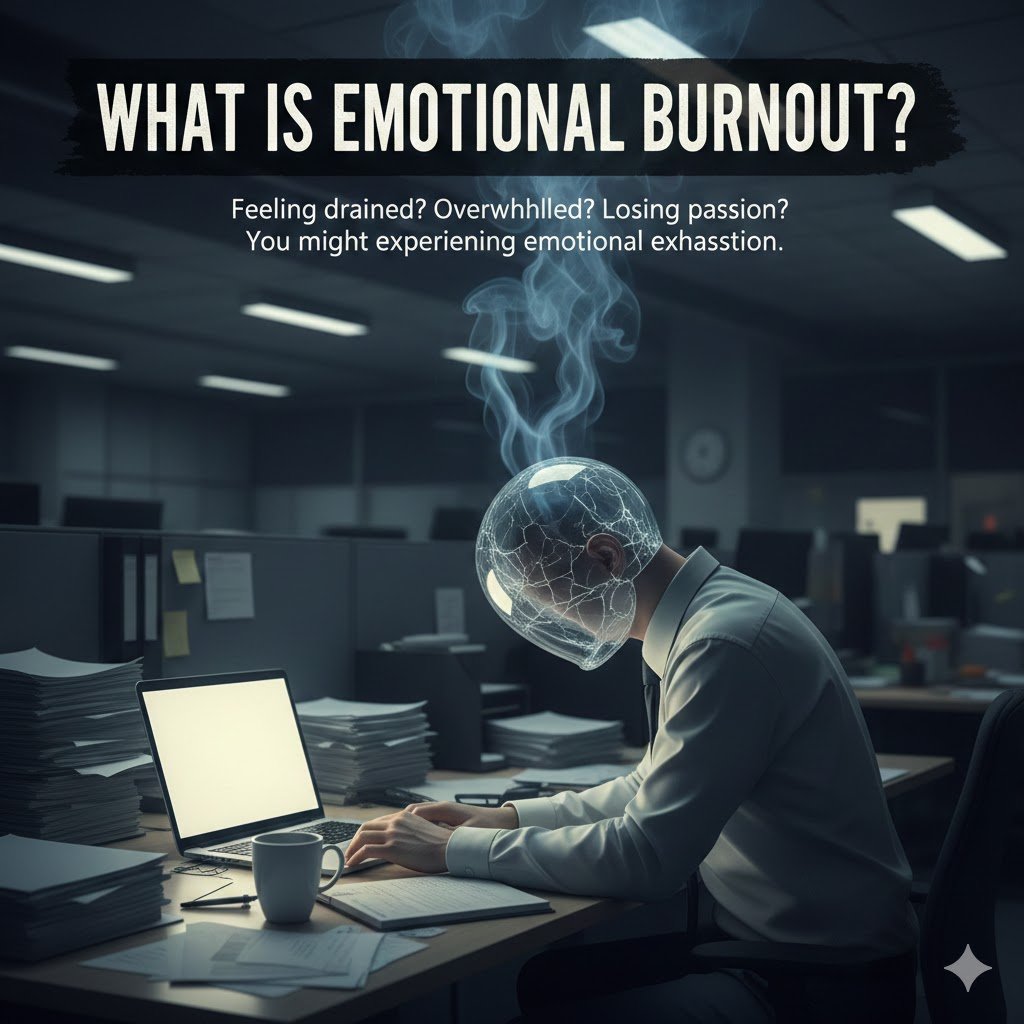
Emotional burnout has become one of the most widespread yet least acknowledged psychological struggles of our time. While physical exhaustion and mental overload are openly discussed, emotional burnout remains hidden—often masked by productivity, forced positivity, and the pressure to “keep going.”
People experiencing emotional burnout may seem functional on the outside: they work, they socialize, they take care of responsibilities. But internally, they feel drained, detached, overwhelmed, and unable to process emotions. Emotional burnout doesn’t happen overnight—it builds slowly, silently, and systematically, until one day you realize you no longer feel like yourself.
If you’ve ever wondered:
“Why do I feel so tired even when I’m not doing much?”
“Why am I numb, irritated, or disconnected?”
“Why does life feel heavier than usual?”
This article is for you.
This guide explores the real meaning of emotional burnout, the hidden signs, the root causes, and the science-backed steps to recover. It is written following Intent Model principles—answering the reader’s true underlying intent: to understand their emotional exhaustion and learn how to heal from it.
What Is Emotional Burnout?
Emotional burnout is a state of deep emotional exhaustion caused by chronic stress, prolonged emotional suppression, and overwhelming responsibilities.
It is different from physical tiredness.
It is different from regular stress.
Emotional burnout affects your:
- Ability to feel
- Ability to cope
- Ability to think clearly
- Ability to connect with others
- Ability to experience joy or motivation
People often describe it as:
- “I feel empty.”
- “I’m on autopilot.”
- “I’m exhausted for no reason.”
- “I can’t handle anything anymore.”
- “I’m emotionally done.”
Though widely experienced, emotional burnout is rarely discussed—especially in cultures that glorify productivity and emotional resilience.
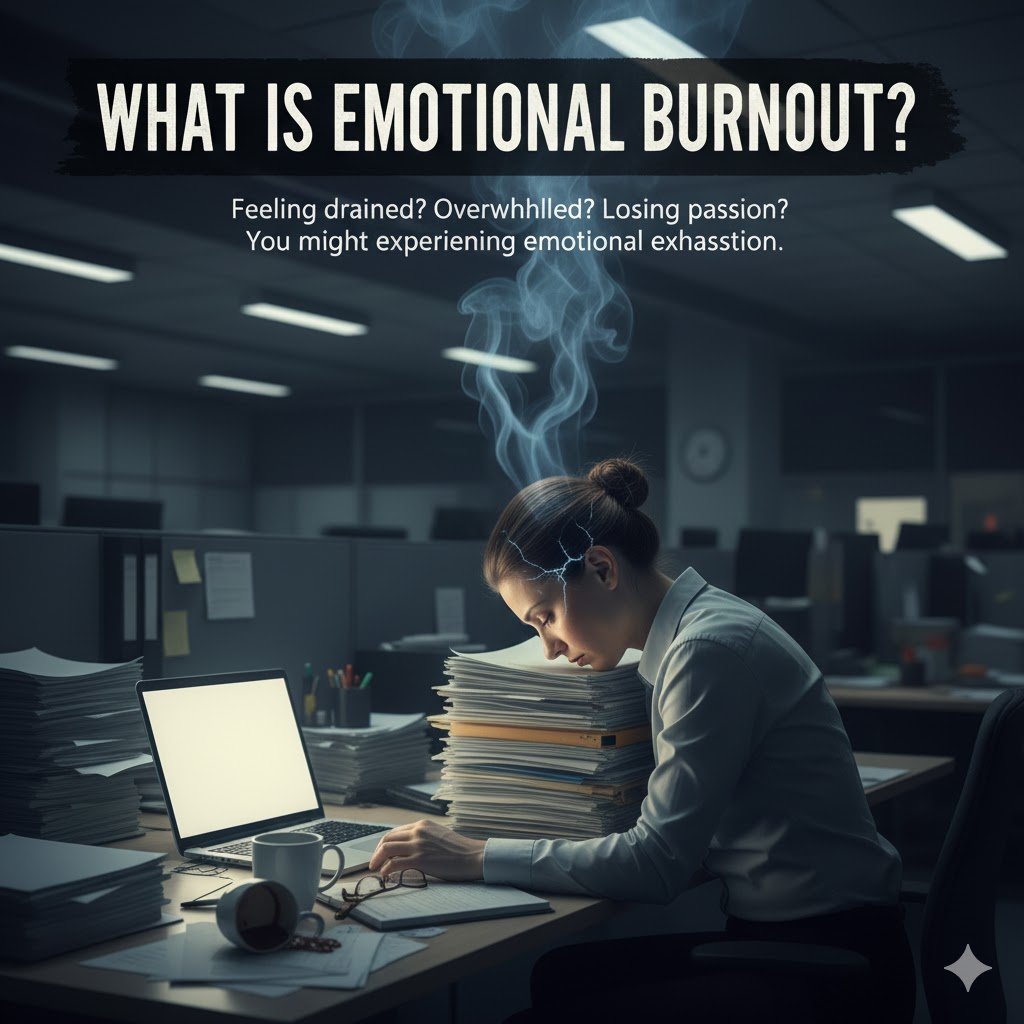
Why Emotional Burnout Is the Hidden Crisis
Most people don’t realize emotional burnout is happening until it’s severe. Here’s why:
1. Burnout hides behind a high-functioning lifestyle
You can be productive and emotionally burned out at the same time.
High achievers experience this more than anyone.
2. Society normalizes “pushing through” discomfort
People learn to ignore emotional fatigue because resting, slowing down, or saying “I’m not okay” is seen as weakness.
3. Emotional pain is easier to mask
You can smile, work, care for others, and still be deeply drained inside.
4. Many adults never learned emotional processing
Instead, they learned:
“Be strong.”
“Don’t cry.”
“Keep it together.”
These beliefs lead to chronic emotional suppression.
5. Emotional burnout doesn’t look dramatic
It looks like:
- Silence
- Withdrawal
- Irritability
- Numbness
- Overthinking
- Fatigue
Subtle signs—often ignored.
The 12 Hidden Signs of Emotional Burnout
If you’re wondering whether you’re experiencing emotional burnout, here are the signs people rarely talk about:
1. You feel emotionally numb
You don’t feel joy, sadness, excitement, or passion.
Everything feels “flat.”
Numbness is your mind’s way of protecting you from overwhelm.
2. You don’t have the energy to care anymore
Not because you don’t want to care—
but because you have nothing left to give.
This includes:
- Loss of motivation
- Loss of interest
- Loss of emotional capacity
3. You avoid emotional conversations
You shut down.
You distance yourself.
You don’t want to talk about anything deep.
This isn’t avoidance out of malice—
it’s avoidance out of exhaustion.
4. You wake up tired, even after sleeping
This is the classic sign of emotional fatigue.
Your body rests, but your emotions do not.
5. You feel overwhelmed by small tasks
Making decisions feels impossible.
Simple responsibilities feel heavy.
A tiny inconvenience can break you.
This isn’t weakness—it’s burnout.
6. You withdraw from people
You crave silence.
You don’t want messages, calls, or demands.
You want space, not because you dislike people,
but because your emotional system is overloaded.

7. You notice mood swings and irritability
Emotional burnout can make you:
- Snappy
- Easily irritated
- Impatient
- Sensitive
This happens because your emotional threshold is low.
8. You don’t recognize yourself
You feel unlike your usual self:
less motivated, less social, less alive.
This identity disconnection is a major sign of emotional burnout.
9. You push yourself even when you’re drained
You continue:
- Working
- Giving
- Helping
- Performing
…even though you’re emotionally exhausted.
Because being strong has become your survival mode.
10. You feel guilty for resting
Burnout makes you believe:
“I can’t stop.”
“I’m being lazy.”
“I should be productive.”
Rest becomes a luxury instead of a basic need.
11. You rely on distractions to cope
Such as:
- Scrolling
- Overworking
- Overeating
- Numbing
- Escaping
Anything to avoid feeling.
12. You feel disconnected from life
The world feels distant.
Everything is muted.
Meaning becomes blurry.
This is emotional burnout at its peak.
What Causes Emotional Burnout? (The Root Reasons)
Understanding the cause is the first step toward healing.
1. Emotional overload
You’ve been feeling too much for too long:
stress, pressure, responsibilities, emotional labor.
2. Chronic people-pleasing
Taking care of everyone else while ignoring your own needs.
3. Suppressing emotions instead of processing them
Every unprocessed emotion accumulates until your system crashes.
4. High expectations of yourself
Perfectionism, overperforming, and the fear of disappointing others lead to emotional exhaustion.
5. Continuous exposure to stress
Work stress, family pressure, financial fear, or relationship challenges.
6. Lack of emotional support
You don’t have a safe space to express feelings—so they stay inside.
7. Being “the strong one” for too long
People rely on you.
You carry everyone’s burdens.
But no one carries yours.
8. Living without emotional boundaries
You absorb too much from others—energy, emotions, problems.
9. Neglecting your own needs
Because you’re busy surviving, achieving, or caring for others.

The Science Behind Emotional Burnout
Emotional burnout affects your brain and body:
Amygdala becomes hyperactive
You react more emotionally to stress.
Prefrontal cortex weakens
Decision-making becomes harder.
Dopamine levels drop
Making joy, motivation, and pleasure feel distant.
Cortisol increases
Causing fatigue, anxiety, and emotional instability.
Burnout is not “in your head.”
It is a physiological state created by emotional overload.
How Emotional Burnout Affects Your Life
Emotional burnout can impact every area of your life:
Relationships
You feel disconnected, irritated, or emotionally unavailable.
Work
Lack of focus, low motivation, decreased performance.
Mental Health
Higher risk of anxiety, depression, or emotional withdrawal.
Physical Health
Fatigue, headaches, sleep issues, muscle tension, digestive problems.
Self-Identity
Losing touch with who you are and what you want.
This is why acknowledging burnout early is crucial.
How to Recover From Emotional Burnout (Step-By-Step Guide)
Healing from emotional burnout requires intentional, gentle, and consistent steps.
Here’s what truly works:
1. Start by acknowledging your exhaustion
The first step is honesty:
“I’m burned out emotionally.”
Awareness itself begins healing.
2. Stop suppressing your emotions
Let yourself:
- cry
- feel
- release
- express
- journal
Emotions you release will not control you.
3. Reduce emotional labor
Say no.
Take breaks.
Stop carrying problems that aren’t yours.
You are not responsible for fixing everyone.
4. Create emotional boundaries
Examples:
- “I can’t take calls after 8 PM.”
- “I’m not available for emotional dumping.”
- “I need time for myself.”
Your energy is sacred.
5. Slow down your pace
Burnout thrives in speed.
Healing thrives in slowness.
Take slow mornings.
Take mindful breaks.
Breathe.
6. Reconnect with your body
Emotions live in the body.
Try:
- yoga
- stretching
- somatic healing
- mindful walking
- body scans
Reconnect with your physical self.
7. Rebuild joy through small, gentle pleasures
Not big achievements—simple moments:
- soft music
- sunlight
- warm tea
- nature
- a quiet morning
Micro-joys restart emotional circuits.
8. Seek emotional support
Talk to:
- a therapist
- a healer
- a coach
- a trusted friend
Burnout heals faster in connection.
9. Redefine your pace of life
Ask yourself:
- What am I doing out of expectation rather than desire?
- What drains me?
- What nourishes me?
You may need to restructure your lifestyle.
10. Start reconnecting with your inner voice
Burnout disconnects you from yourself.
Healing reconnects you.
You can try:
- journaling
- meditation
- introspective questions
- silence
- creative expression
Your inner voice returns when you slow down enough to hear it.

What Emotional Burnout Is Trying to Tell You
Burnout is not a failure—
it is a message.
It is your heart saying:
“I can’t carry this anymore.”
It is your mind saying:
“I need rest.”
It is your body saying:
“Slow down.”
It is your inner self saying:
“Come back to me.”
Burnout happens when the life you are living is too far from the life you need.
You Are Not Broken — You Are Overwhelmed
Emotional burnout is a silent crisis
because too many people suffer in silence.
If you feel numb, tired, detached, or overwhelmed—
you are not weak.
You are not dramatic.
You are not “losing it.”
You are exhausted.
You are drained.
You are overloaded.
You need support, softness, rest, and reconnection.
Emotional burnout is not the end—
it is the turning point.
A moment when your body and heart whisper:
“You can’t keep living like this.
It’s time to choose yourself.”