
The unseen psychological and physiological forces quietly draining your energy.
WHEN REST DOESN’T FEEL LIKE REST ANYMORE
You wake up after 7–8 hours of sleep — the number experts say is “ideal.”
You didn’t stay up late.
You weren’t drinking.
You weren’t on your phone until 3 AM.
You did everything “right.”
Yet you open your eyes feeling heavy… foggy… drained.
Your body is awake, but your energy isn’t.
Your mind feels slow before the day even begins.
You’re already tired — before anything has even happened.
This is one of the most confusing experiences of modern life:
being exhausted despite sleeping well.
And the truth is:
This tiredness has very little to do with the quantity of sleep —
and everything to do with the quality of your internal world.
This article explores the deeper, more hidden reasons people feel drained even when their sleep appears normal.
This is NOT about sleep hygiene, bedtime routines, or fixing your schedule.
This is about the root psychological and physiological reasons your body stays tired even when your eyes are closed.
Before healing can begin,
we must understand the invisible causes of exhaustion that sleep alone cannot fix.
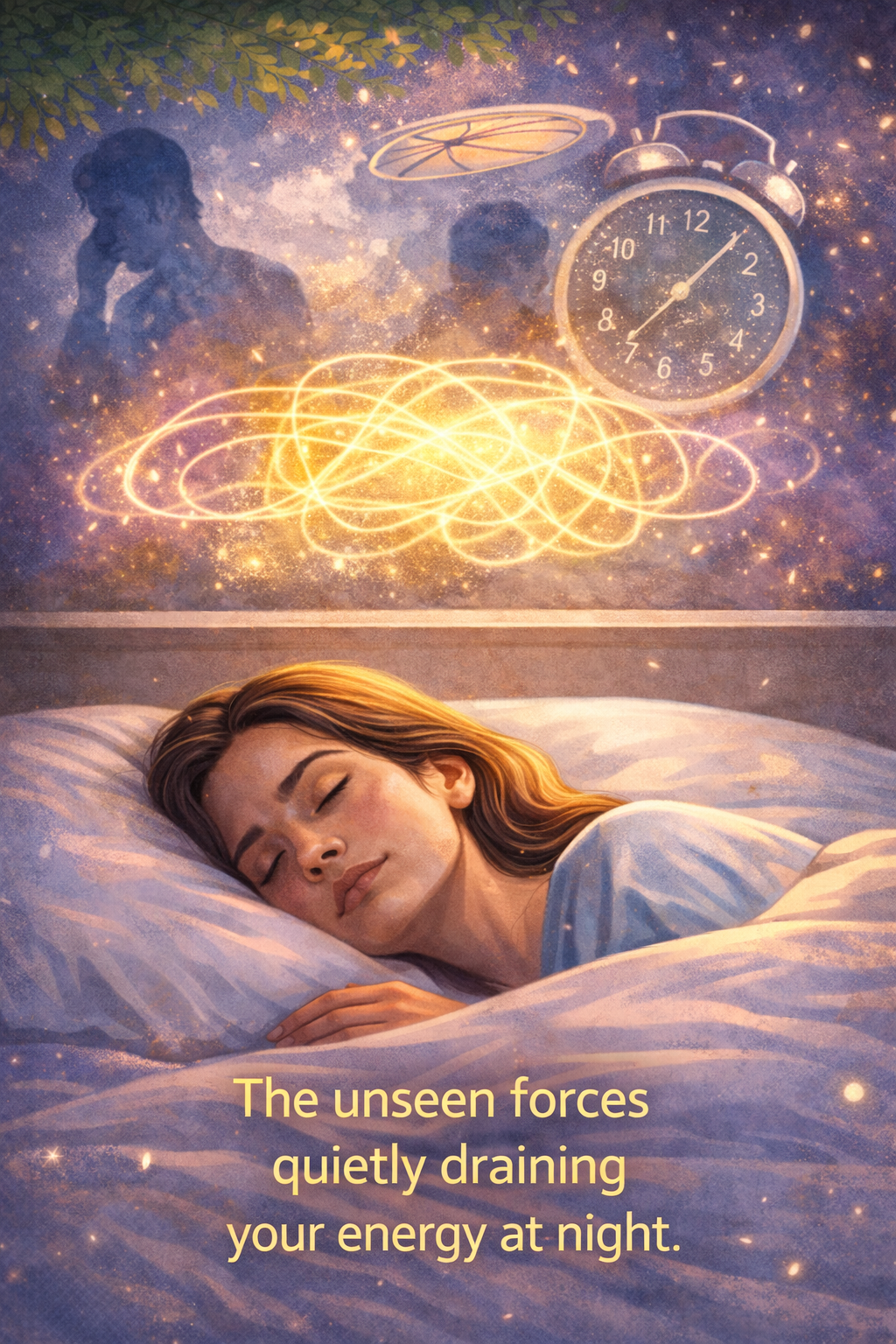
⭐ 1. YOUR MIND WAS NOT RESTING AT NIGHT — EVEN IF YOUR BODY WAS
Most people believe sleep is “off.”
But the mind rarely turns off.
Your brain continues:
- emotional processing
- threat scanning
- stress assimilation
- internal dialogue
- unresolved thought loops
- subconscious tension release
Even when your body lies still,
your nervous system may still be working overtime.
This means:
sleep becomes maintenance, not restoration.
You wake up physically rested —
but mentally unchanged.
If your mind is active all night,
your body wakes up already behind.
This leads to:
- morning heaviness
- mental fog
- low motivation
- emotional flatness
- unexplainable fatigue
You slept…
but you didn’t reset.
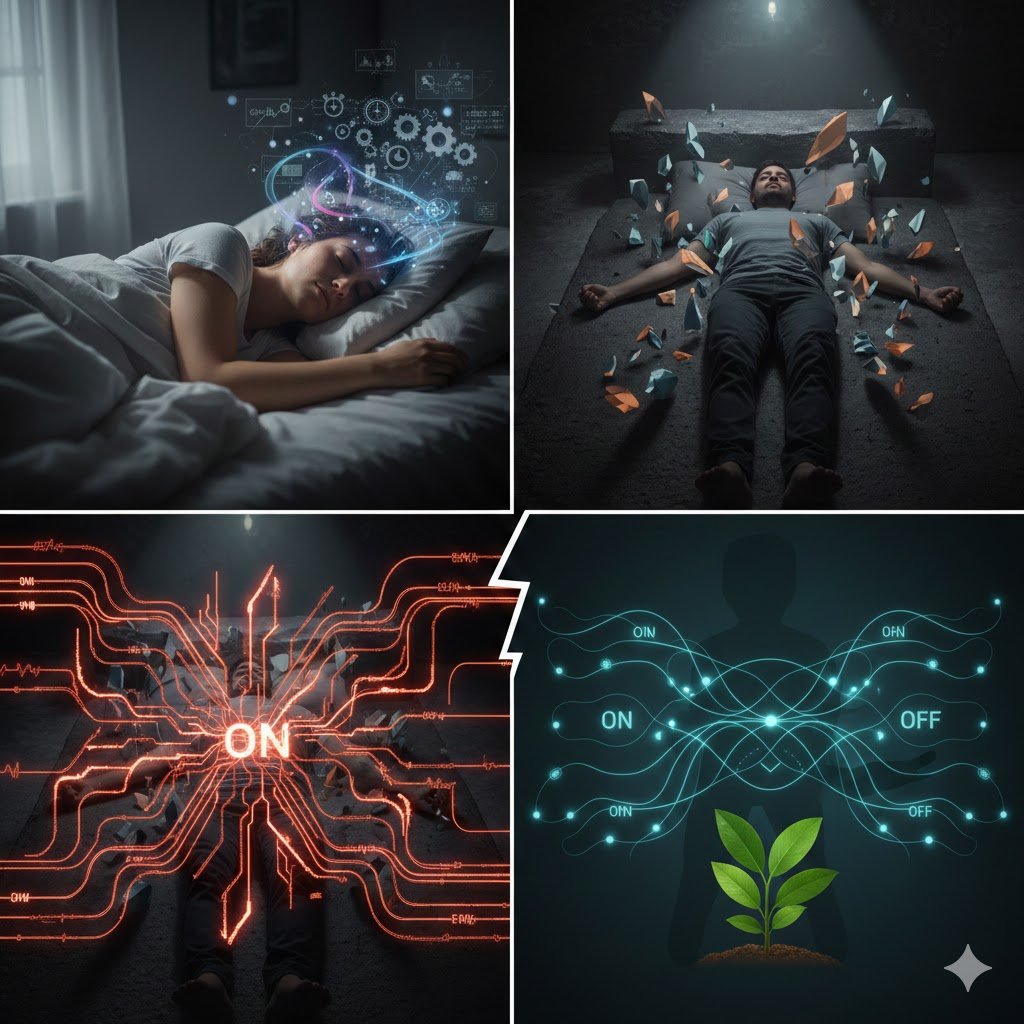
⭐ 2. “STRESS SLEEP” IS NOT REAL REST — IT IS SURVIVAL-BASED SHUTDOWN
There is a type of sleep people don’t talk about:
Stress-induced sleep.
It looks like normal sleep,
but it functions like a forced shutdown.
When your mind is overwhelmed:
- you crash
- you pass out
- you collapse emotionally
This sleep is not healing —
it is your brain turning off because it cannot cope.
It’s like shutting down a computer without properly closing programs.
Inside the mind:
- emotional files remain open
- background worries keep running
- stress hormones stay high
- unresolved tension lingers
So when you wake up:
- everything is still there
- nothing has been cleared
- and exhaustion continues
This is why you feel tired even after “sleeping well”
— because the sleep wasn’t restorative.
It was a pause, not a recovery.
⭐ 3. EMOTIONAL FATIGUE HITS HARDER THAN PHYSICAL FATIGUE
Here is a truth people underestimate:
Emotional exhaustion drains the body more than physical activity does.
You can walk miles and feel fine.
But one difficult conversation can drain your whole day.
This is because emotional fatigue:
- overloads the limbic system
- heightens stress hormones
- disrupts circadian rhythms
- tightens muscles subconsciously
- compresses breathing
Even if your sleep is perfect,
your emotional landscape may be chaotic.
And emotional chaos is the biggest energy thief.
This is why:
- people with anxiety wake up tired
- people in unhealthy relationships feel drained
- people living in constant pressure never feel rested
- people suppressing emotions feel chronically fatigued
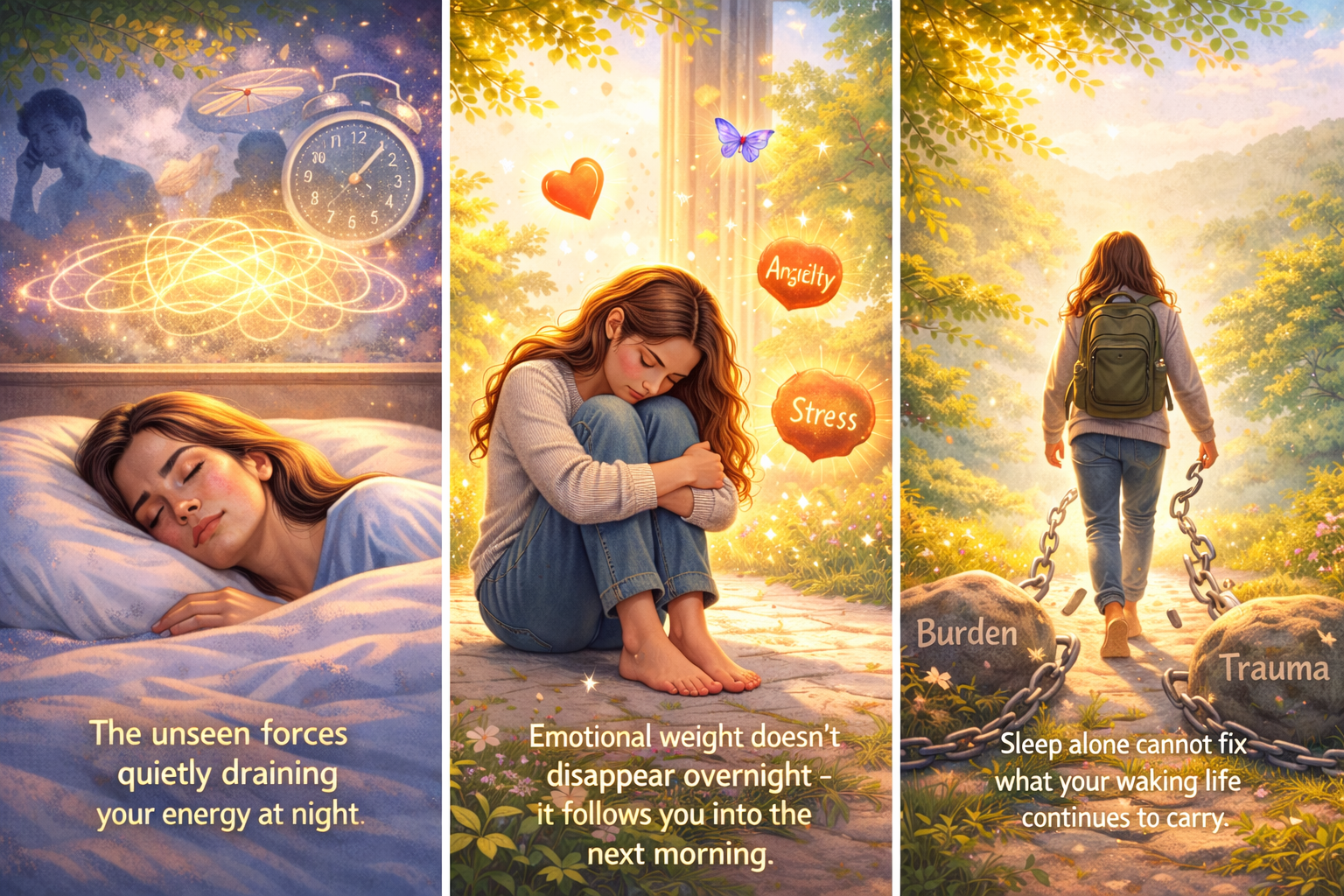
Emotional weight doesn’t disappear overnight —
it follows you into the next morning.
⭐ 4. YOUR NERVOUS SYSTEM IS STUCK IN “ON” MODE — EVEN WHILE YOU SLEEP
The nervous system has two primary modes:
- Sympathetic (ON — alert, scanning, intense)
- Parasympathetic (OFF — calm, restored, rebalanced)
Rest requires the parasympathetic system.
But most modern adults stay stuck in chronic activation —
a constant low-level fight-or-flight state.
If your nervous system never reaches “rest mode,”
your sleep becomes:
- shallow
- fragmented
- mentally restless
- physically incomplete
You may not notice it.
The fatigue tells the story for you.
This state often comes from:
- unresolved stress
- emotional suppression
- constantly pleasing others
- internal conflict
- unpredictable environments
- hidden mental burdens
Your body lies down,
but your nervous system stays standing.
⭐ 5. YOUR THOUGHTS ARE DRAINING MORE ENERGY THAN YOUR ACTIONS
Overthinking is not “mental activity.”
It is mental depletion.
Every loop of:
- “What if?”
- “Did I say the wrong thing?”
- “I hope they’re not upset…”
- “What am I even doing with my life?”
…robs the brain of ATP (energy), oxygen efficiency, and cognitive resources.
So even if you sleep 8 hours,
your brain wakes up feeling like it ran a marathon.
Overthinking at night — even unconsciously — leads to:
- restless dreaming
- fragmented sleep cycles
- emotional hangovers
- cognitive fatigue
- difficulty focusing
You may not remember the thoughts —
but your mind does.
And it wakes up already tired.
⭐ 6. YOUR BODY IS RESTING — BUT YOUR MIND IS DEFENDING
Many people are tired because they’re not just sleeping —
they are recovering from constant self-defense.
If your life requires you to:
- protect yourself emotionally
- walk on eggshells
- pretend to be okay
- hold back your true feelings
- suppress sadness or anger
- manage someone else’s emotions
- hide parts of yourself
Then your sleep becomes:
a break from performing — not a break from existing.
You wake up feeling drained
because every day requires emotional armor.
Armor is heavy.
And it does not come off at night.
⭐ 7. THE ENERGY DRAIN OF UNLIVED EMOTIONS
Unprocessed emotions don’t disappear.
They accumulate.
Every emotion you avoid:
- sadness
- fear
- resentment
- disappointment
- heartbreak
- guilt
- longing
…becomes stored as tension in your body.
Your muscles hold what your mind avoids.
Even when asleep,
your subconscious continues grappling with the emotional weight.
This leads to:
- tight shoulders
- clenched jaw
- shallow breathing
- stiff neck
- early morning fatigue
Your sleep cannot heal what your mind refuses to feel.
⭐ 8. INTERNAL CONFLICT IS THE MOST EXHAUSTING TYPE OF FATIGUE
You can rest from physical work.
You can recover from stressful events.
But internal conflict is a constant drain.
Examples:
- wanting change but fearing it
- loving someone who hurts you
- needing rest but forcing productivity
- pretending to be strong while breaking inside
- hiding emotions that need expression
Internal battles consume enormous energy —
even when you’re doing nothing physically.
If your heart and mind are at war,
sleep offers no true refuge.
You cannot sleep away a conflict within yourself.
⭐ 9. NOT ALL SLEEP IS EQUAL — MOST PEOPLE GET “LOW-QUALITY REST”
Deep rest is not the same as being unconscious.
Many people spend their nights in:
- REM overload
- shallow light sleep
- stress-altered sleep
- subconscious tension cycles
- hormonal imbalance patterns
This makes sleep less restorative and more mechanical.
You go through the motions of sleeping
but don’t access true recovery — the kind that:
- resets your mind
- clears emotional weight
- restores mental sharpness
- improves mood
- rebalances your system
You wake up technically rested,
but energetically depleted.
⭐ 10. YOU’RE CARRYING A TYPE OF TIREDNESS THAT SLEEP CANNOT TOUCH
This is the part most people misunderstand:
Not all tiredness is physical.
Not all fatigue can be fixed by sleep.
There are deeper types of exhaustion:
- emotional exhaustion
- psychological depletion
- existential fatigue
- identity strain
- relational burnout
- nervous system fatigue
- suppressed emotion fatigue
- trauma-triggered tiredness
Sleep does not cure these.
Sleep is not designed to cure these.
This is why you wake up and feel:
- unclear
- unmotivated
- overwhelmed
- heavy
- uninterested
- slow
- disconnected
- drained without reason
The tiredness is not coming from your sleep.
It’s coming from your life.
And sleep alone cannot fix a tired life.
⭐ CONCLUSION: YOUR FATIGUE HAS A STORY — AND IT’S NOT ABOUT SLEEP
Feeling tired after sleeping well is not laziness.
It’s not weakness.
It’s not lack of discipline.
It is a symptom of deeper emotional, psychological, and neurological demands that your sleep alone cannot soothe.
Your exhaustion is not random —
it is information.
It is your mind trying to communicate what your lifestyle has been suppressing.
Before healing can begin,
we must first understand:
You are not tired because you didn’t sleep.
You are tired because your inner world is overwhelmed.
And recognizing this truth
is the first step toward meaningful change —
even if the steps toward healing come later.