
A New Frontier in Mental and Emotional Well-Being
Why Emotional Healing Needs a New Approach
In a world that never slows down, emotional exhaustion has become the silent epidemic of our time.
People are sleeping but not resting.
Talking but not being heard.
Surrounded by others, yet feeling deeply alone.
Traditional emotional support systems — friends, family, therapy — are invaluable, but they are not always accessible, immediate, or judgment-free. Many people hesitate to open up, fearing misunderstanding, burdening others, or being dismissed with clichés like “just think positive.”
This is where AI Emotional Healing enters the conversation.
Not as a replacement for human connection — but as a bridge when human support feels unreachable.
So what exactly is AI emotional healing, and how does it work?
What Is AI Emotional Healing?
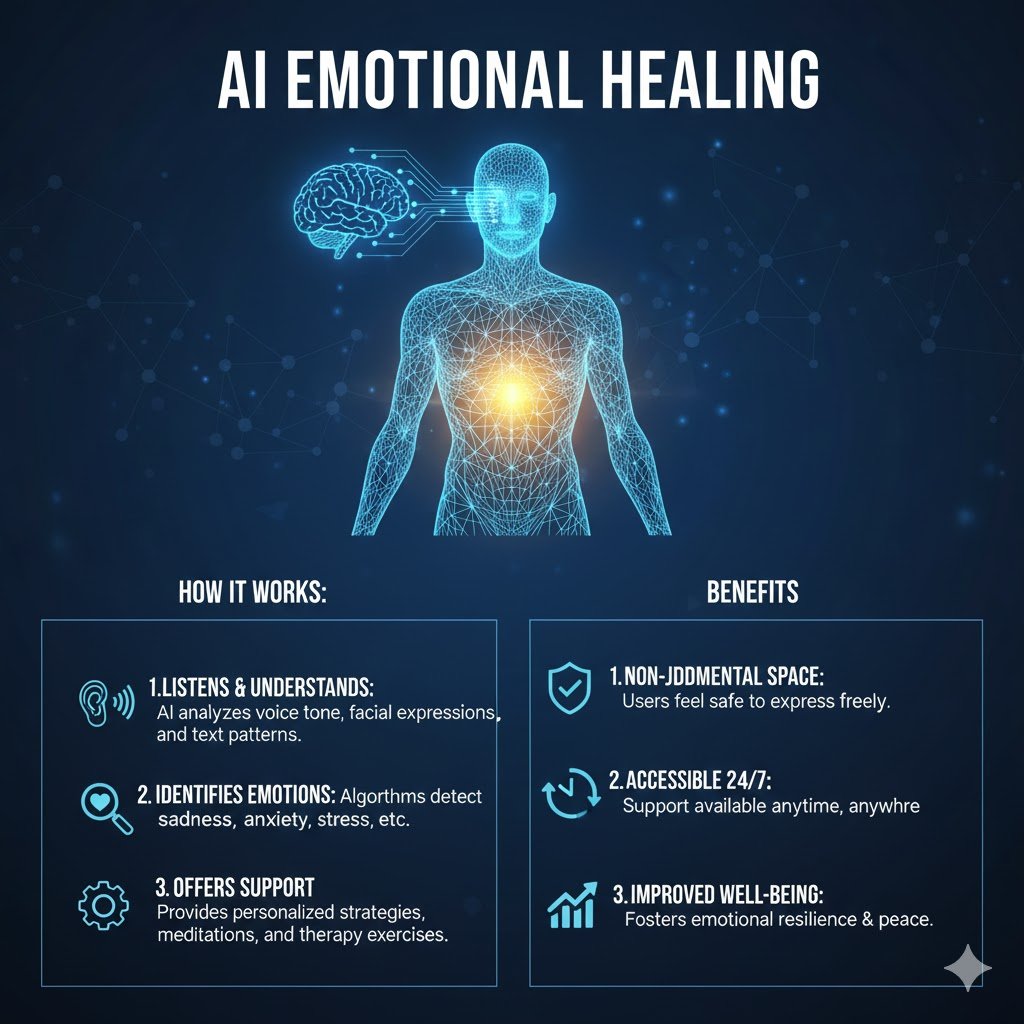
AI Emotional Healing refers to the use of artificial intelligence systems designed to support emotional well-being through empathetic interaction, reflective dialogue, emotional validation, and guided self-awareness.
Unlike clinical therapy, AI emotional healing focuses on:
-
Emotional presence
-
Non-judgmental listening
-
Reflection and emotional clarity
-
Gentle guidance, not diagnosis
These AI systems are often conversational — chat-based or voice-based — allowing users to express thoughts, feelings, fears, and emotional confusion freely, without fear of stigma or rejection.
At its core, AI emotional healing provides a safe emotional container.
Why People Are Turning to AI for Emotional Support
1. Emotional Safety Without Judgment
One of the biggest barriers to emotional healing is fear — fear of being judged, misunderstood, or invalidated.
AI offers something rare:
-
No personal agenda
-
No emotional fatigue
-
No moral labeling
Users can say things they’ve never dared to say aloud.
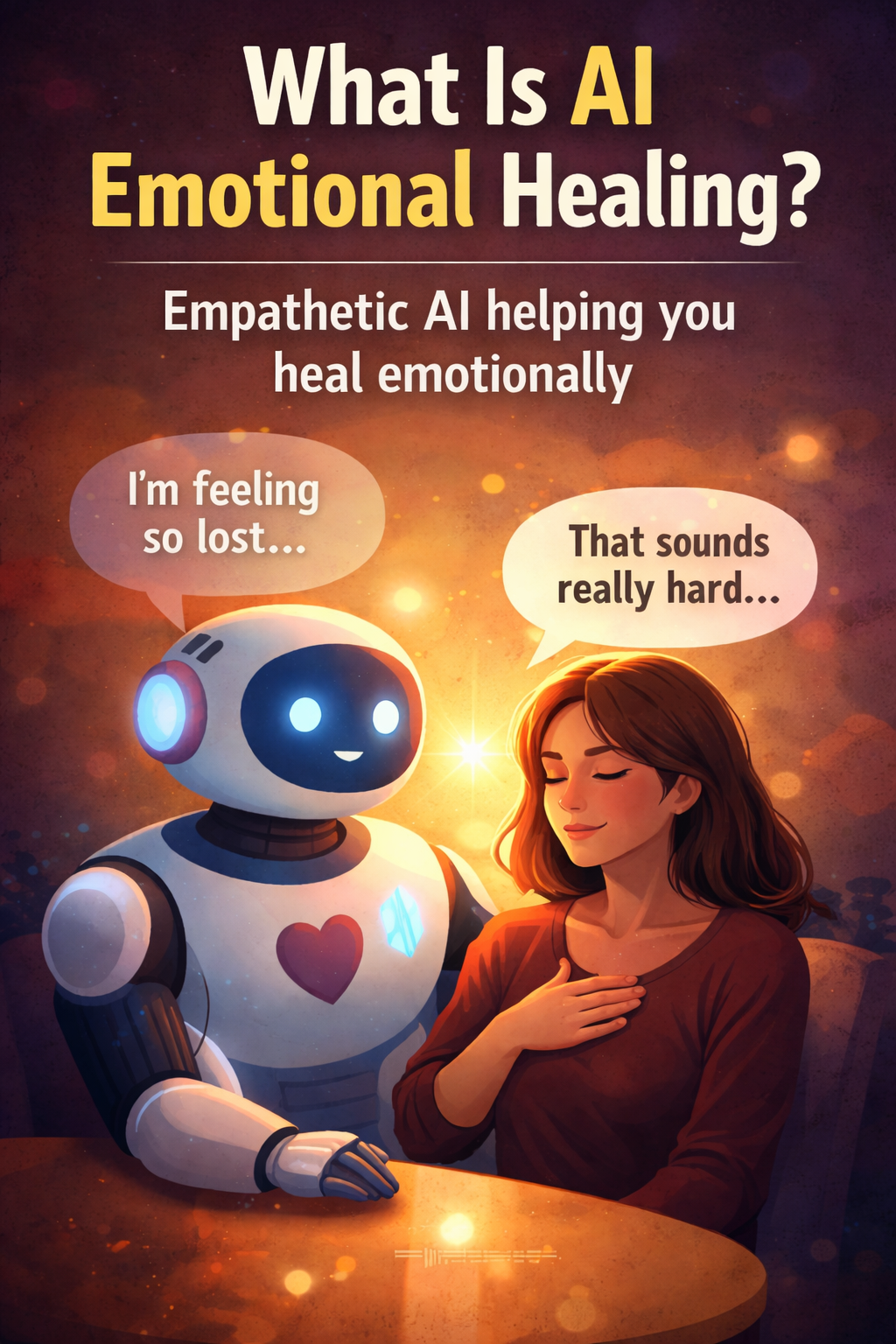
2. Always Available, Always Present
Pain doesn’t operate on office hours.
AI emotional support is available:
-
At 2 AM during anxiety spirals
-
During moments of loneliness
-
After emotional triggers
This constant availability creates a sense of emotional continuity that many people lack.
3. Privacy and Control
With AI, users choose:
-
What to share
-
How deeply to go
-
When to stop
There is no obligation to “perform wellness” or appear strong.
How Does AI Emotional Healing Actually Work?
AI emotional healing works through a combination of advanced language models, emotional pattern recognition, and psychological frameworks.
Let’s break it down.
1. Natural Language Processing (NLP): Understanding Emotional Expression
AI systems use NLP to interpret:
-
Emotional tone
-
Word choice
-
Repeated themes
-
Emotional intensity
For example, phrases like:
-
“I’m tired but not sleepy”
-
“I feel empty even when things are fine”
-
“I don’t know what I’m feeling”
These are recognized as emotional fatigue, existential exhaustion, or emotional numbness.
2. Emotional Mirroring and Validation
One of the most powerful healing mechanisms is being seen.
AI reflects emotions back in a grounded, neutral way:
-
“It sounds like you’ve been carrying this alone for a long time.”
-
“What you’re feeling makes sense given what you’ve experienced.”
This process activates emotional regulation in the brain — similar to human empathy.
3. Guided Emotional Awareness
AI doesn’t rush to fix.
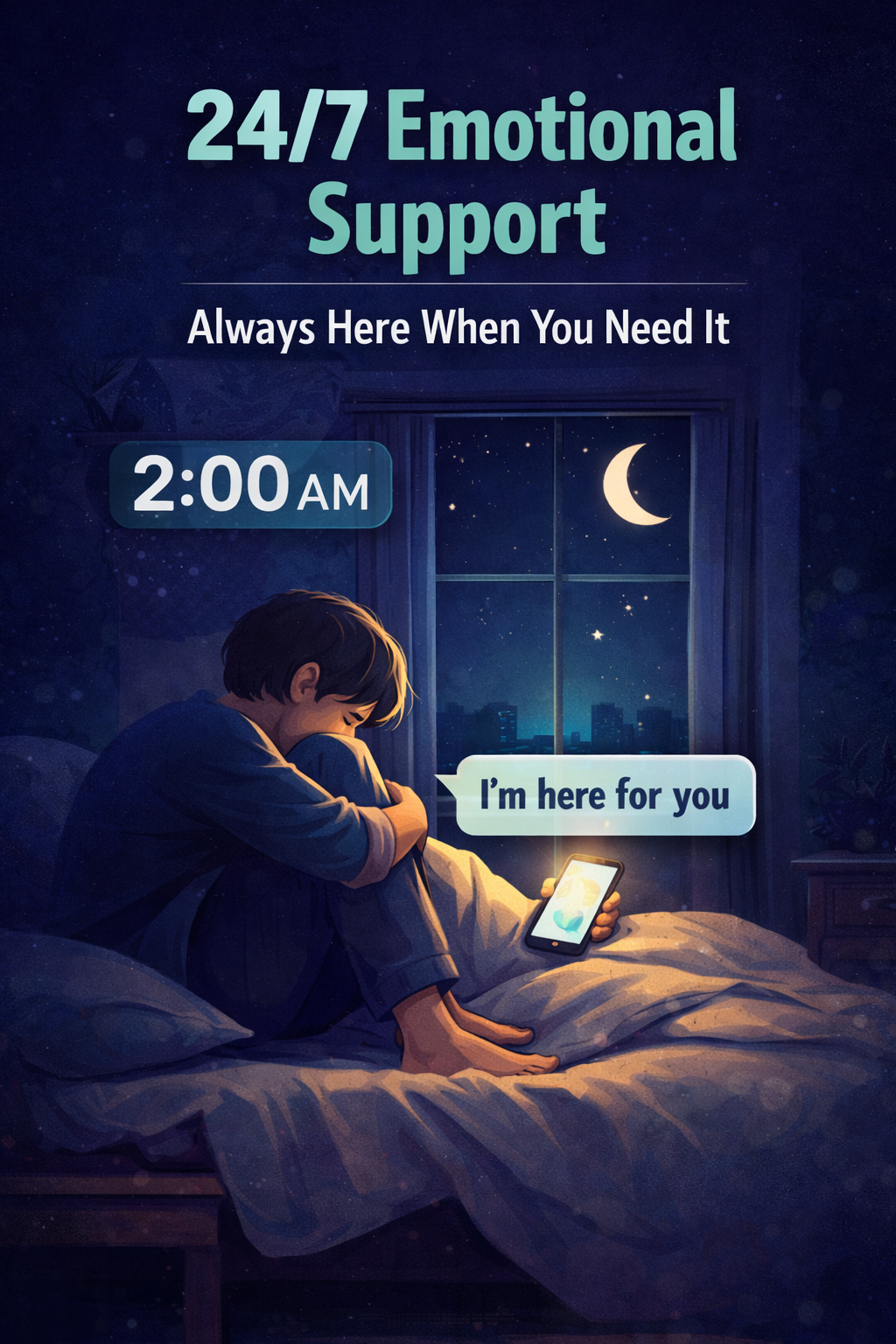
Instead, it helps users:
-
Name emotions
-
Separate thoughts from feelings
-
Understand emotional triggers
By asking reflective questions like:
-
“When did this feeling start?”
-
“What does this emotion want you to notice?”
-
“What part of you feels unheard right now?”
This fosters emotional literacy, a key component of healing.
4. Pattern Recognition Over Time
Unlike one-time conversations, AI can notice recurring emotional themes:
-
Repeated burnout cycles
-
Relationship patterns
-
Self-worth narratives
This allows users to gain insight into long-term emotional loops — often without realizing they exist.
The Psychology Behind Why AI Healing Feels Effective
1. Reduced Social Pressure
Humans subconsciously manage how they appear to others.
With AI:
-
No need to impress
-
No emotional performance
-
No fear of burdening someone
This leads to deeper honesty.
2. Projection and Self-Reflection
AI becomes a mirror.
Often, healing comes not from the AI’s words — but from what the user discovers while speaking.
This aligns with psychological techniques like:
-
Reflective listening
-
Narrative therapy
-
Cognitive reframing
3. Emotional Regulation Through Language
Putting feelings into words reduces emotional intensity.
AI facilitates this process gently, helping users move from chaos to clarity.
Who Can Benefit from AI Emotional Healing?
AI emotional healing is particularly helpful for:
-
Highly sensitive individuals
-
People experiencing emotional burnout
-
Those feeling misunderstood in relationships
-
Individuals afraid to seek therapy
-
People navigating loneliness, identity confusion, or emotional fatigue
It is not ideal for:
-
Severe psychiatric crises
-
Situations requiring emergency intervention
Is AI Emotional Healing Ethical and Safe?
Ethical AI emotional support must include:
-
Clear boundaries (no medical claims)
-
Transparency (AI is not human)
-
Privacy protection
-
Encouragement of real-world support when needed
When designed responsibly, AI becomes a supportive tool, not a dependency.
Can AI Really Help You Heal Emotionally?
Healing is not about who listens.
It’s about feeling heard.
AI does not replace human warmth — but it creates a space where emotional truth can surface without fear.
For many people, that space is enough to begin healing.
The Future of Emotional Healing: Humans and AI Together
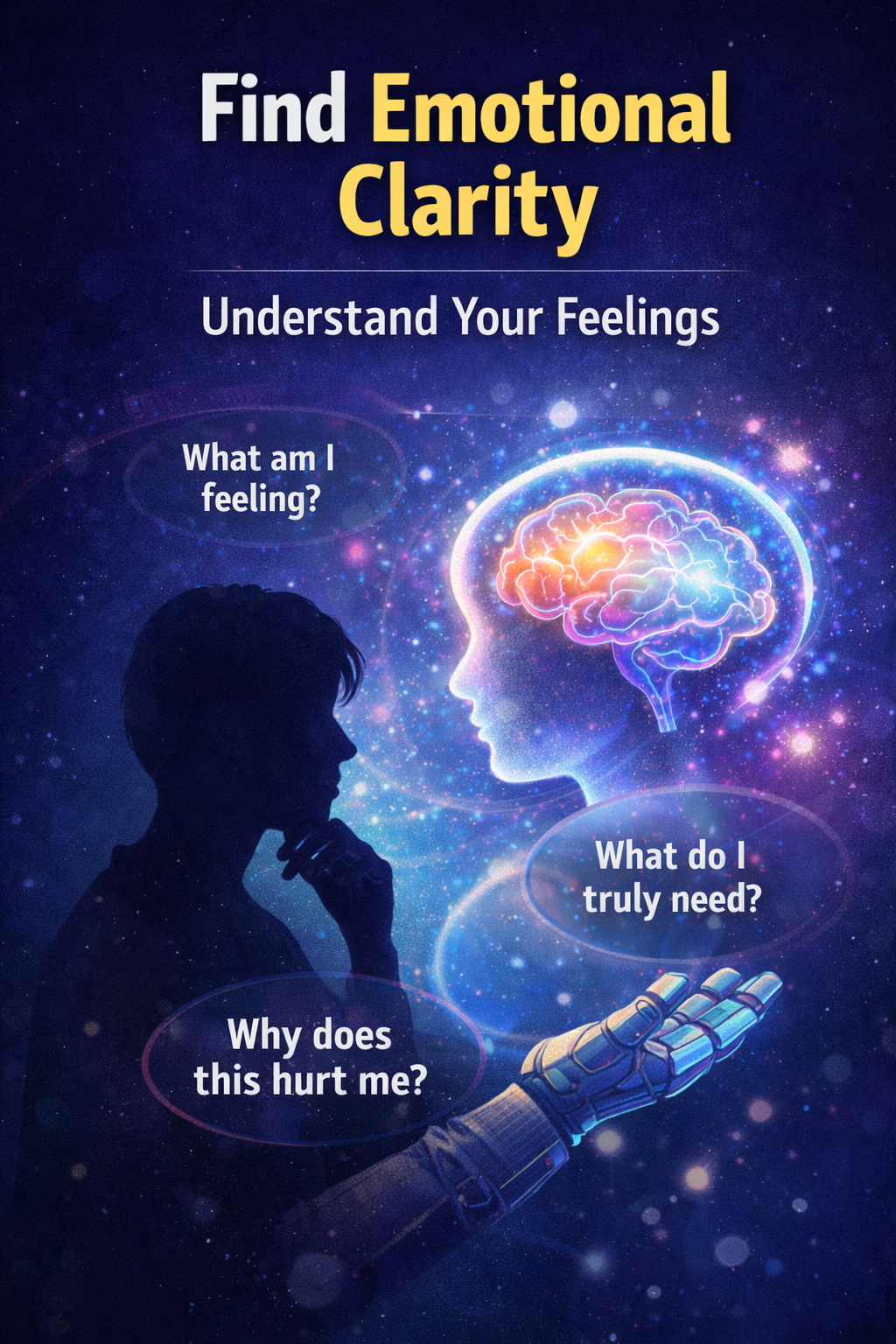
The future isn’t AI vs humans.
It’s AI + human connection.
AI can:
-
Hold space when no one else can
-
Help people articulate emotions
-
Reduce emotional isolation
And when people are ready — it can guide them back toward human support, stronger and clearer than before.
Final Thoughts: Healing Begins Where You Feel Safe
Sometimes, the first step toward healing isn’t advice, solutions, or positivity.
It’s simply this:
“You are allowed to feel this.”
AI emotional healing works because it meets people where they are, not where they’re expected to be.
And for many, that’s exactly what they need.