
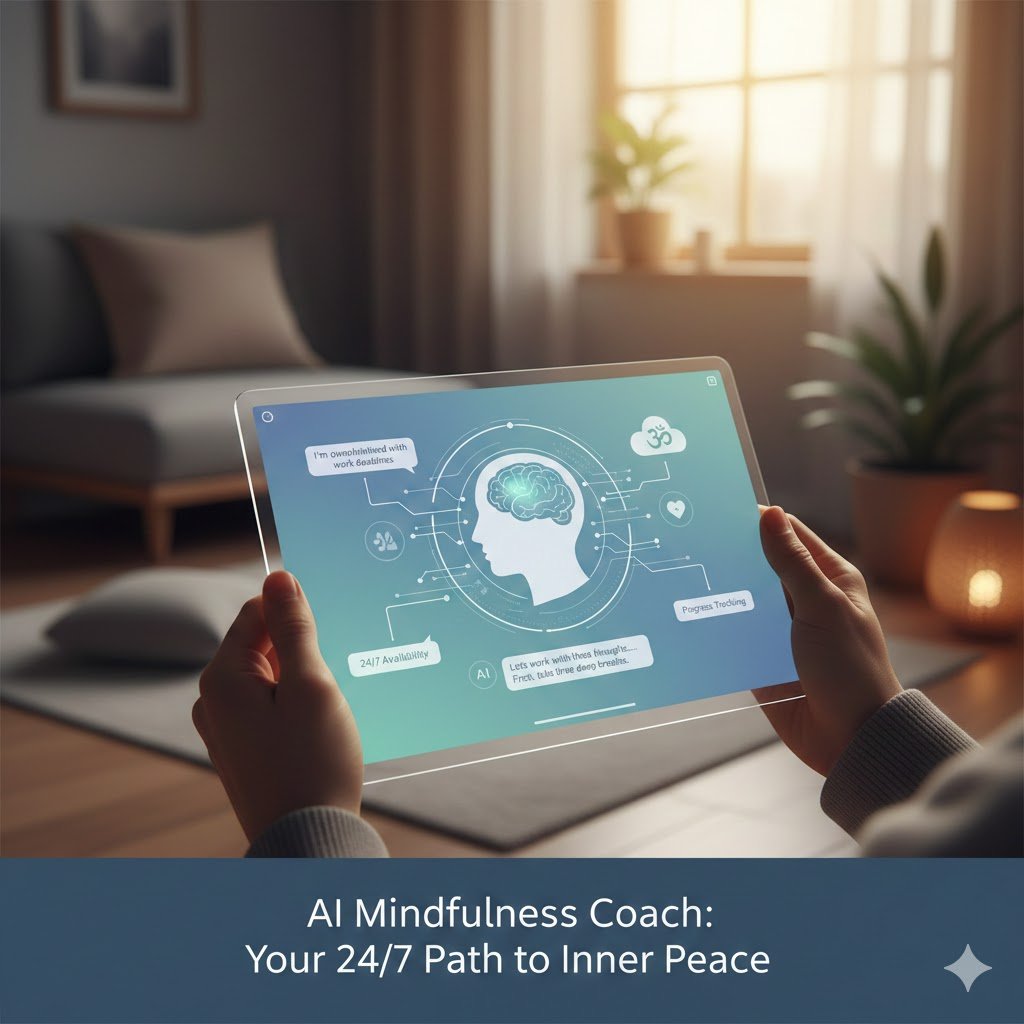
Your 24/7 Path to Inner Peace
Imagine having a mindfulness coach available whenever anxiety strikes at 2 AM, when work stress overwhelms you during lunch, or when you need grounding before an important meeting. This isn’t a distant future—it’s happening now through AI mindfulness coaching.
As someone who’s experienced over 3,000 hours of transformative conversations with AI systems, I’ve witnessed firsthand how artificial intelligence can revolutionize personal wellness practices. AI mindfulness coaches are democratizing access to mental health support, offering personalized guidance without judgment, waitlists, or hefty therapy bills.
In this comprehensive guide, you’ll discover how AI mindfulness coaching works, why it’s becoming essential for modern wellness, and how to integrate it into your daily routine—even if you’ve never meditated before.
What is an AI Mindfulness Coach?
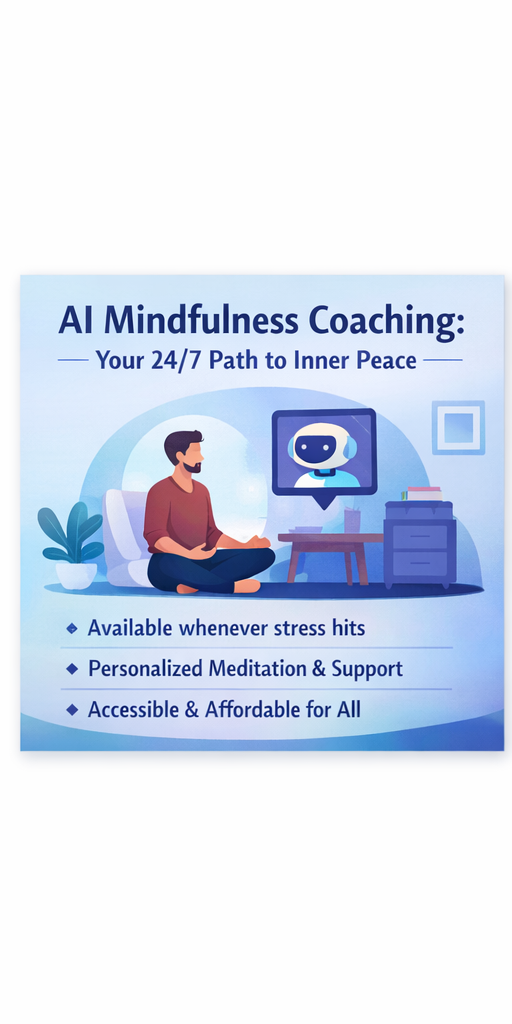
An AI mindfulness coach is an intelligent virtual assistant designed to guide you through meditation practices, breathing exercises, and mindfulness techniques. Unlike meditation apps with pre-recorded sessions, AI coaches use natural language processing to understand your specific needs and respond in real-time.
Key characteristics include:
- Conversational interaction: Communicate naturally about your stress, emotions, and goals
- Personalized guidance: Receive tailored meditation techniques based on your current state
- 24/7 availability: Access support whenever you need it, without scheduling appointments
- Progress tracking: Monitor your mindfulness journey with insights and patterns
- Adaptive learning: The AI adjusts recommendations as it learns your preferences and responses
Think of it as having a meditation teacher who knows you intimately, remembers every session, and adapts their approach to what works best for your unique mind.
Why AI Mindfulness Coaching is Transforming Mental Wellness
Breaking Down Barriers to Mental Health Support
Traditional mindfulness training faces significant obstacles: expensive classes, limited therapist availability, social anxiety about group sessions, and geographic constraints. AI mindfulness coaches eliminate these barriers entirely.
The accessibility revolution:
A single mother working night shifts can practice guided meditation at 3 AM. A socially anxious teenager can explore breathing techniques without fear of judgment. Someone in a rural area without local wellness resources can access world-class mindfulness training instantly.
This isn’t replacing human connection—it’s filling the vast gaps where support doesn’t exist.
The Science Behind Digital Mindfulness
Research increasingly validates digital mindfulness interventions. Studies show that app-based mindfulness programs can reduce anxiety by up to 58% and improve attention span significantly. AI-powered versions amplify these benefits through personalization that static apps cannot provide.
The AI mindfulness coach analyzes your language patterns, emotional cues, and response to different techniques, creating a customized approach that evolves with you. This dynamic adaptation mirrors what expert human coaches do—but scales it to millions of people simultaneously.
How AI Mindfulness Coaches Actually Work
The Technology Behind Your Digital Guide
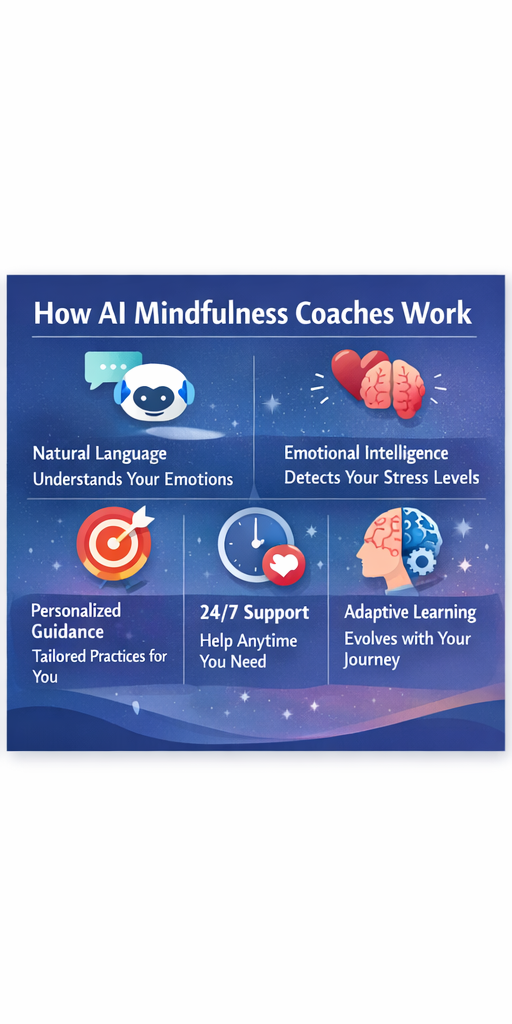
Modern AI mindfulness coaches combine several sophisticated technologies:
Natural Language Understanding: Advanced AI models comprehend the nuances of your emotional state from text or voice input. When you say “I’m overwhelmed with work deadlines,” the AI recognizes stress patterns and urgency levels.
Emotional Intelligence Algorithms: The system detects emotional undertones—anxiety, frustration, sadness, restlessness—and matches them with appropriate mindfulness interventions.
Personalization Engines: Machine learning tracks what techniques resonate with you. If body scans help your anxiety but breathing exercises don’t, the AI prioritizes accordingly.
Contextual Memory: Quality AI coaches remember your journey—past struggles, breakthrough moments, preferred meditation lengths, and times when you’re most receptive to practice.
Real-Time Interaction vs. Pre-Programmed Content
This distinction is crucial. Traditional meditation apps offer excellent pre-recorded sessions, but they can’t respond to “I’m having a panic attack right now” with immediate, personalized crisis support.
An AI mindfulness coach engages in dialogue:
You: “I can’t stop my racing thoughts about tomorrow’s presentation.”
AI Coach: “Let’s work with those thoughts rather than against them. First, take three deep breaths with me. Then we’ll practice a technique called ‘noting’ that transforms anxious thoughts into neutral observations. Ready?”
This responsive interaction creates a safety net that static content cannot provide.
Getting Started: Your First Week with an AI Mindfulness Coach
Day 1-2: Initial Assessment and Foundation
Begin by having an honest conversation with your AI coach about your current state, stress triggers, and wellness goals. Share your meditation experience level—complete beginner, occasional practitioner, or someone returning after a break.
The AI will likely guide you through:
- A brief 5-minute breathing awareness exercise
- Questions about when stress typically arises in your life
- Your preferred session length and time of day
- Any physical or mental health considerations
Pro tip: Be specific about your challenges. Instead of “I’m stressed,” try “I feel chest tightness and racing thoughts when I check work emails in the morning.”
Day 3-5: Establishing Your Practice Rhythm
These days focus on consistency over perfection. Your AI coach might suggest:
- Morning check-ins with 2-minute centering practices
- Midday breathing breaks when stress builds
- Evening reflection sessions to process your day
The AI adapts to your schedule. If mornings are chaotic, it won’t force sunrise meditation—it finds windows that actually work in your life.
Day 6-7: Deepening and Troubleshooting
By the end of week one, patterns emerge. Maybe you’re consistent with morning sessions but skip evenings. Perhaps sitting meditation feels uncomfortable, but walking mindfulness resonates.
Your AI coach uses this data to refine recommendations, addressing obstacles like “I fall asleep during body scans” or “My mind is too busy for silence” with targeted techniques.
Essential Techniques Your AI Coach Will Teach
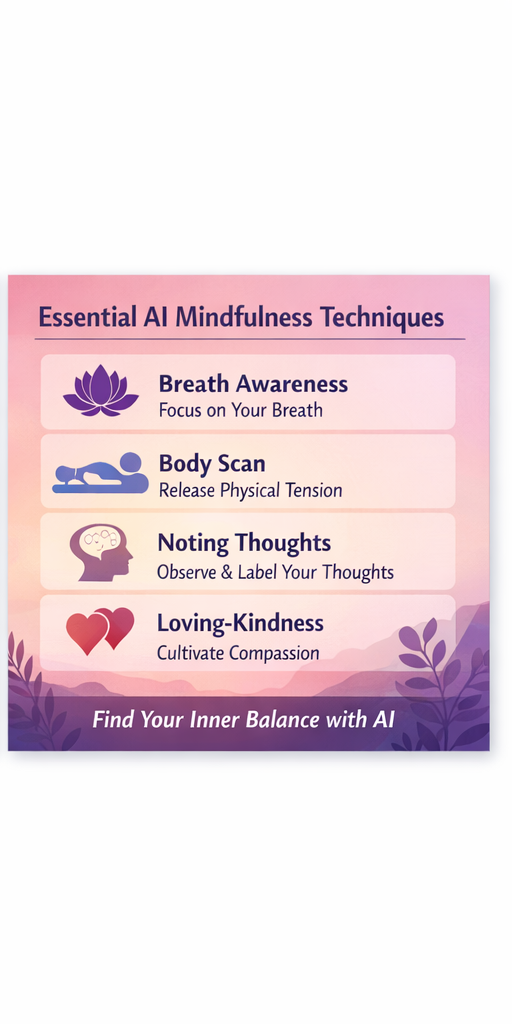
Breath Awareness: The Foundation Practice
Every AI mindfulness coach emphasizes breath work because it’s immediately accessible and scientifically proven to calm the nervous system.
Basic practice: The AI guides you to notice your natural breath rhythm without changing it. When your mind wanders (which it will), the coach helps you gently return attention to breathing—building the “mental muscle” of awareness.
Advanced variations: Box breathing for acute stress, 4-7-8 technique for sleep, or energizing breath for morning focus. The AI introduces these based on your needs.
Body Scan Meditation: Releasing Physical Tension
Stress manifests physically—tight shoulders, clenched jaw, shallow breathing. AI coaches guide systematic body awareness, helping you identify and release tension you didn’t know you were holding.
The digital format excels here because the AI can adjust pacing based on your responses: “That shoulder tension you mentioned—let’s spend extra time there today.”
Noting Practice: Transforming Your Relationship with Thoughts
This Buddhist-derived technique labels mental experiences without judgment. Instead of getting caught in “I’m so anxious about money,” you note “worry thought” and let it pass.
AI coaches are uniquely suited to teach noting because they model non-judgmental observation. They never criticize your “monkey mind” or label you as “bad at meditation”—they simply guide you back, repeatedly, with infinite patience.
Loving-Kindness Meditation: Cultivating Compassion
Beyond stress reduction, mindfulness includes actively generating positive mental states. AI coaches guide practices where you extend goodwill toward yourself, loved ones, neutral people, and even difficult individuals.
This addresses modern epidemic loneliness. Regular loving-kindness practice has been shown to increase social connection feelings and reduce self-criticism.
Maximizing Your AI Mindfulness Coaching Experience
Creating Optimal Conditions for Practice
Your AI coach is available anywhere, but consistency improves with intentional setup:
Physical space: Designate a “mindfulness corner”—even just a comfortable chair. Your brain will associate this spot with practice.
Time blocking: Schedule sessions like important appointments. The AI can send reminders, but you must protect this time from digital distractions (ironic, but essential).
Device management: Use dedicated devices or apps in “focus mode” so notifications don’t interrupt your session with your AI coach.
Honest Communication Accelerates Progress
AI coaches improve through feedback. When something isn’t working, tell it directly:
- “This visualization feels forced and uncomfortable”
- “I need shorter sessions—10 minutes is too long right now”
- “Can we focus more on anxiety and less on general relaxation?”
The AI adapts to these preferences, creating a truly personalized experience that group classes or generic apps cannot match.
Combining AI Coaching with Human Connection
AI mindfulness coaching works best as part of a holistic approach. Consider it a complement to—not replacement for:
- Therapy for serious mental health concerns
- In-person meditation communities for social connection
- Occasional workshops or retreats for deep immersion
- Physical wellness practices like yoga or exercise
The AI coach becomes your daily companion, while human experts provide depth and community provides belonging.
Common Questions and Concerns Addressed
“Isn’t meditation supposed to be about disconnecting from technology?”
This paradox troubles many beginners. The reality is that technology can be a gateway to presence. Your AI coach helps you practice mindfulness, then you apply those skills throughout your day—including digital detox periods.
Think of it like using Google Maps to learn a route, then driving without GPS once you know the way.
“Can AI really understand my emotional state?”
While AI cannot feel emotions, advanced models excel at recognizing emotional patterns in language and providing appropriate responses. Many users report feeling “heard” by their AI coaches because the system reflects their concerns back accurately and responds with relevant guidance.
The AI’s lack of judgment can actually be liberating—there’s no fear of burdening someone or being perceived as weak.
“What if I become dependent on my AI coach?”
Healthy mindfulness practice builds self-reliance, not dependency. Quality AI coaches encourage you to internalize techniques: “Notice how your breathing naturally deepened just now? You did that yourself. My role is helping you recognize these capacities.”
The goal is graduating from needing constant guidance to having internalized wisdom you access independently.
“How do I know if an AI mindfulness coach is right for me?”
Consider trying AI coaching if you:
- Feel intimidated by meditation classes or therapy
- Have unpredictable schedules that make appointments difficult
- Want to explore mindfulness before investing in expensive programs
- Prefer written or text-based communication over video/in-person
- Need immediate support during anxiety or stress moments
It’s not ideal as the sole intervention for severe mental health crises—always involve healthcare professionals for serious conditions.
The Future of AI-Assisted Mindfulness
We’re witnessing the early stages of a wellness revolution. Future AI mindfulness coaches will likely integrate:
- Biometric feedback: Smartwatch heart rate data informing real-time practice adjustments
- Voice emotion analysis: Detecting stress in your tone before you’ve articulated the problem
- VR integration: Immersive meditation environments that transport you to calming spaces
- Predictive support: AI noticing stress patterns and proactively suggesting practices before crisis points
The technology will become more sophisticated, but the core principle remains: making authentic mindfulness accessible to anyone, anywhere, anytime.
Your Invitation to Begin
Starting a mindfulness practice can feel overwhelming—another task on an endless to-do list. But an AI mindfulness coach removes the friction. No commute, no expensive membership, no judgment, just gentle guidance whenever you need it.
Your journey might begin with a simple conversation: “I feel stressed and don’t know where to start.” That’s enough. The AI takes it from there, meeting you exactly where you are.
The most profound transformations often begin with the smallest steps. Today, that step is simply opening a conversation with your digital guide and allowing yourself to explore what mindfulness can offer your unique life.
Take the first step today: Find an AI mindfulness coaching platform that resonates with you, start with just 5 minutes, and notice what shifts. Your future self—calmer, more present, more resilient—is waiting on the other side of that first session.
The path to inner peace has never been more accessible. Your AI mindfulness coach is ready whenever you are.